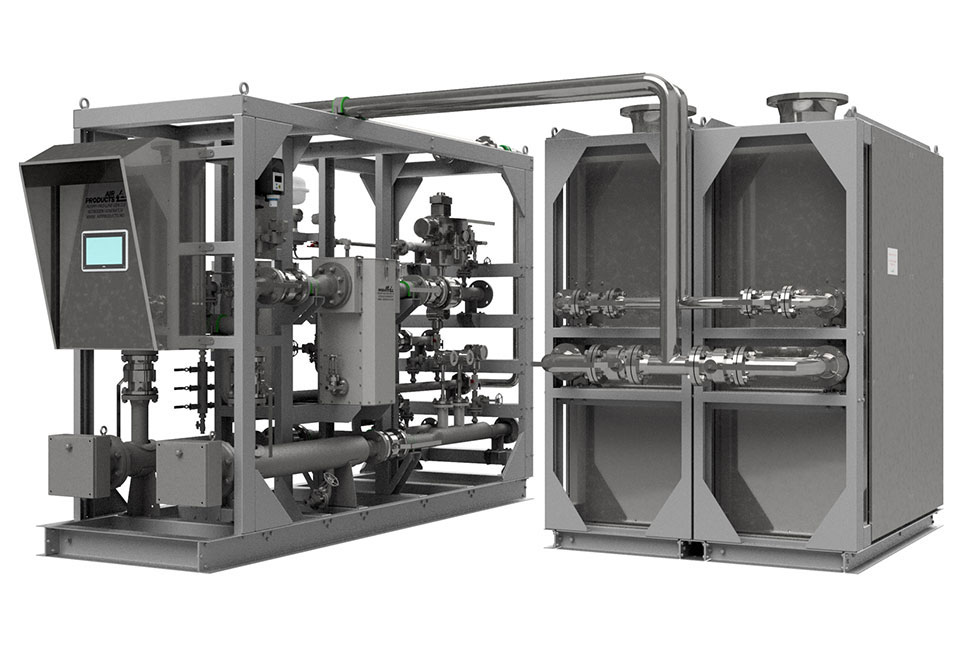
Rising gas prices, delivery delays, and tight production targets have many operations asking the same thing: Is A Nitrogen Generator Worth It? For a growing number of manufacturers, food processors, labs, and fabricators, the answer is yes, often decisively so. By generating nitrogen on-site, they cut the premium baked into cylinders and bulk deliveries, stabilize purity and supply, and unlock sustainability wins that auditors (and customers) notice. Below, this guide breaks down real cost drivers, expected savings, technology choices, and reliability metrics, so they can judge the investment with clear numbers, not guesswork.
Calculating ROI: comparing generation costs versus cylinder supply
For most sites, the return on a nitrogen generator hinges on one thing: the spread between delivered gas costs and the all‑in cost to self‑generate.
Here’s a simple way they can frame it.
- Quantify current demand
- Flow: average and peak (e.g., 20–60 m³/h or 700–2,100 scfh)
- Purity: 95–99.999% N₂
- Operating hours: shifts per day, days per week
- Tally delivered-gas costs
- Gas price per unit (including fuel surcharges and hazmat fees)
- Cylinder or tank rental
- Delivery frequency (and minimums)
- Losses from residual gas left in cylinders (5–15% is common)
- Estimate generation costs
- Electricity for the air compressor, dryer, and N₂ system
- Preventive maintenance (filters, valves, adsorbent service)
- Amortized capital cost over expected life
A conservative snapshot many plants see today:
- Delivered cylinders or microbulk: $0.40–$1.40 per m³ ($11–$40 per 1,000 scf) when all charges are included
- On‑site generation: $0.05–$0.25 per m³ ($1.40–$7.00 per 1,000 scf) depending on purity, pressure, and power rates
Worked example (typical mid‑size packaging line)
- Demand: 30 m³/h at 99.5% N₂, 16 h/day, 5 d/wk → ~12,480 m³/month
- Current delivered cost (all‑in): $0.70/m³ → ~$8,736/month
- On‑site generation cost: $0.14/m³ → ~$1,747/month
- Monthly savings: ~$6,989
If a right‑sized PSA system (including compressor and air treatment) is financed or depreciated at $140,000 over 6 years, the monthly capital equivalent is roughly $1,944. Net monthly benefit: ~$5,000, delivering a simple payback near 24–30 months, even faster where gas prices or surcharges are higher.
Sensitivity matters. Higher purity (e.g., 99.999%) and higher discharge pressure cost more to generate: but, these same specs carry a premium in delivered gas too. Right‑sizing and reducing pressure/purity to what the process truly needs often tightens payback by 3–9 months.
Bottom line: when they run the math honestly, counting rentals, residual losses, and surcharges, Is A Nitrogen Generator Worth It? For continuous users, the spread typically delivers 30–70% OPEX savings.
Long-term savings from reduced transport and storage expenses
Cylinder logistics quietly eat budgets.
- Delivery fees and rentals: Weekly drops add fuel surcharges and per‑asset rental charges. Over a year, that’s often five figures before a single cubic meter is used.
- Residual gas waste: Safety protocols leave significant gas in cylinders when swapped. Across hundreds of cylinders, it’s real money.
- Inventory carrying costs: Space, racks, and safety compliance (training, inspections, documentation) all carry overhead.
- Unplanned downtime: A missed delivery, or a pallet misplaced between shifts, stops lines. The cost of an hour of downtime dwarfs a month of rental savings.
On‑site generation eliminates most of this meta‑cost. There are no weekly truck arrivals, no “empty” cylinder staging, and far fewer changeovers on the floor. For tight facilities, the reclaimed space can be repurposed for production or WIP. Several plants report indirect productivity gains, fewer operator interruptions and less forklift traffic near critical work cells.
Over a 10‑year horizon, removing transport and storage costs (and the risk they introduce) can add as much value as the direct gas savings themselves.
Energy efficiency improvements with modern PSA and membrane systems
Modern generators squeeze more nitrogen from every kilowatt.
PSA (pressure swing adsorption)
- Best for 98–99.999% purity and medium‑to‑high flows
- Advanced controls trim purge air, and optimized valve timing reduces losses
- When paired with a VSD air compressor and proper air treatment, total specific energy can drop 15–30% versus older packages
Membrane systems
- Ideal for 95–99.5% purity at low‑to‑medium flows and where simplicity is prized
- Few moving parts, fast turndown, excellent for intermittent use
- Lower capex, and with lower purity needs, membranes can beat PSA on lifecycle cost
Right‑sizing is everything. Oversized compressors are silent margin killers. A load/unload machine idling at 30% load can waste thousands per year. Variable‑speed drives, demand‑matching controls, and buffer receivers help keep compressors in their sweet spot. Heat‑recovered from compressors (for space or process heating) effectively knocks down net energy cost further.
The upshot: choosing the correct technology and pairing it with efficient compressed air supply is often the difference between a merely good and a great ROI.
Maintenance schedules and projected generator lifespan
A fair question behind “Is A Nitrogen Generator Worth It?” is maintenance. The answer: routine, predictable, and usually modest compared with delivery logistics.
Typical intervals
- Pre‑filters/coalescers: inspect monthly, change 2–4x/year depending on air quality
- Carbon tower (oil vapor): replace media ~12–24 months if required by purity
- PSA valves and seals: inspection annually: overhaul 5–7 years
- CMS adsorbent: 10–15+ years with clean, dry air and correct operation
- Membrane bundles: 10–15 years: performance declines gradually and is predictable
- Instrumentation/calibration: annually
- Air dryer service (refrigerated or desiccant): per OEM, usually 6–24 months
- Compressors: follow OEM hours: VSD rotary screws commonly see overhauls in the 40,000–60,000‑hour range
Lifespan expectations
- PSA frames and vessels: 15–20+ years
- Membrane skids: 10–15+ years
- Controls and sensors: 7–10 years before modernization
Budgeting rule of thumb: after commissioning, annual maintenance for a well‑designed system often lands around 2–6% of capex, assuming proper air quality. Remote monitoring can catch fouling or drift before it dents purity or flow.
Providers like PneuTech offer service kits, remote support, and lifecycle planning so teams aren’t surprised by a valve pack or adsorbent refresh. Clear PM plans make the investment feel routine, not risky.
Sustainability benefits through waste minimization and on-site reuse
On‑site nitrogen checks three sustainability boxes without hand‑waving.
- Fewer truck miles: Eliminating weekly deliveries avoids tailpipe emissions and fuel burn. For multi‑shift plants, that’s dozens of truck trips a year gone.
- Less hardware churn: Fewer cylinders, pallets, and plastic caps circulating through the supply chain mean less embodied carbon and less scrap over time.
- Lower venting and residuals: Sites no longer vent residual gas from cylinders during changeover. Generators match demand closely, so waste shrinks.
There’s also a quality‑and‑waste angle. Stable purity reduces off‑spec product in MAP packaging, rework in electronics reflow, and assist‑gas inconsistency in laser cutting, all of which carry material and energy footprints. Sustainability teams appreciate that these savings are meterable: kWh in, N₂ out, with no diesel ledger in the middle.
Industry examples showcasing payback periods and reliability metrics
Real‑world outcomes make the case clearer than any brochure.
- Food & beverage (MAP packaging): A snack producer running 25 m³/h at 99.5% replaced weekly cylinder drops. Result: 58% OPEX reduction, payback in 22 months, and fewer line stoppages from cylinder swaps. Uptime on the generator: 99.6% over the first year with scheduled filter changes.
- Electronics (reflow and wave solder): A contract manufacturer needed 99.99% N₂ at modest flows. A compact PSA with VSD compressor cut delivered‑gas costs by ~65%. Quality KPIs improved, voiding defects dropped ~12% with tighter purity control. Payback: ~18 months.
- Laser cutting (assist gas): A fabricator consuming high volumes at varying pressures installed a higher‑capacity PSA with a buffer tank and smart controls. They saw ~45% cost savings versus bulk liquid, plus independence from tanker scheduling. Payback: ~30 months, uptime 99.5%.
- Pharma/biotech (blanketing and purging): With strict purity and documentation, a validated PSA system provided stable 99.999% nitrogen and full audit trails. While capex was higher, avoided delivery disruptions during peak demand seasons saved two near‑miss batch delays. Estimated payback: ~24–28 months.
Across these examples, reliability is not a guess. Properly maintained systems routinely exceed 99.5% operational uptime, and with redundancy (N+1 compressors or dual PSA trains), critical operations effectively eliminate nitrogen‑related downtime.
Vendors like PneuTech often design skids around the actual demand profile, peak, turndown, and purity, so plants aren’t paying for capacity they don’t use. That design discipline is a quiet driver behind the faster paybacks seen in the field.